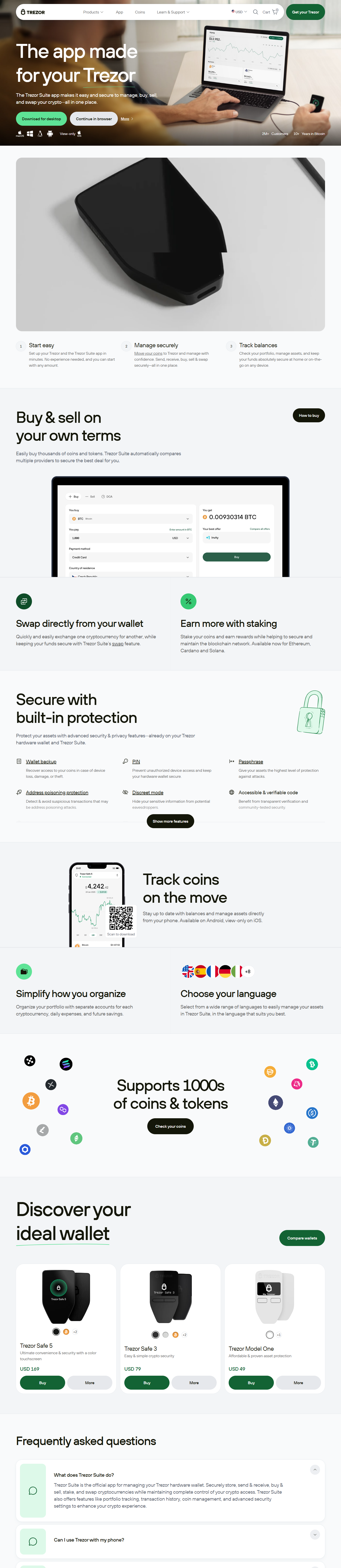
Access, manage and protect your crypto with the Trezor® Management Wallet — secure login, device-first security, and clear control over your private keys.
What is Trezor @Login?
Trezor @Login is the official entry point for the Trezor Management Wallet — a device-centric interface that lets you sign in, manage assets, and approve transactions while keeping your private keys offline on your Trezor hardware wallet. Unlike custodial services, Trezor gives you full ownership of your seed and private keys, while the @Login flow provides a simple, secure way to connect the device and start managing funds.
Key features
Device-first authentication: Sign in by connecting your Trezor device. Authentication requires physical confirmation on the hardware, preventing remote access.
Non-custodial control: Your private keys never leave the Trezor device. The management wallet only sends unsigned transactions to the device for signing.
Multi-asset support: Manage Bitcoin, Ethereum, and hundreds of tokens and coins in one interface.
Clear transaction details: Full transaction metadata is shown on-device for review before signing.
Recovery & backup: Seed generation and recovery tools guide you through creating a secure backup phrase, with education on safe storage practices.
How to sign in with Trezor @Login
Follow these steps to sign in and start using the Trezor Management Wallet:
Open the official Trezor Suite or visit the verified web interface for the Trezor Management Wallet.
Connect your Trezor device to your computer using the supplied USB cable.
Enter your device PIN on the hardware — the PIN is never transmitted to the computer.
On the Trezor device, confirm the connection and approve any requested actions by physically pressing the device buttons.
Once connected, your wallet dashboard will show account balances and recent activity. From there you can send, receive, and manage assets.
Security best practices
Trezor's security model relies on keeping private keys isolated on the hardware. Use these recommended practices to maintain safety:
Buy from official channels: Always purchase Trezor devices from the official store or authorized resellers to avoid tampered hardware.
Secure your recovery seed: Write your 12–24 word recovery phrase on the supplied card or a metal backup and store it offline in a safe place. Never store your seed digitally or share it.
Use a strong PIN: Choose a PIN you can remember but others cannot guess. The PIN entry happens on the device for safety.
Verify addresses on-device: Always confirm that the receiving address shown in the management wallet matches the address displayed on your Trezor screen before approving transactions.
Keep firmware updated: Install firmware updates from official Trezor sources to receive security patches and new features.
Privacy and open-source
Trezor is committed to transparency: device firmware and client code are open-source, allowing independent audits. Your activity is as private as the networks you use — Trezor does not hold or broadcast your private keys. When using third-party services, review their privacy practices to understand what metadata might be shared.
Common tasks
Sending crypto
Compose a transaction in the management wallet, then review the full transaction details on your Trezor device screen. Approve by confirming on the device; the signed transaction is then broadcast from your computer or the connected client.
Receiving crypto
Click Receive to generate a fresh deposit address. Verify the exact address both in the client and on the Trezor device screen before sharing it with the sender.
Recovering a wallet
If you have a recovery phrase from a previous Trezor or compatible device, use the Recover option during initialization. Carefully enter each word using the device interface. After recovery, verify account balances and transactions on the management wallet.
Troubleshooting
If your Trezor device is not recognized, try these steps:
Reconnect the USB cable and try another USB port or cable.
Ensure your browser or Trezor Suite is up to date and that you are using the official Trezor web client or app.
Reboot your computer and reconnect the device.
Check for firmware updates via the official interface; follow the documented update process carefully.
If problems persist, consult Trezor's official support documentation or contact support through official channels — avoid sharing your recovery seed with anyone.
Frequently asked questions
Can Trezor be hacked remotely?
Trezor's architecture prevents remote extraction of private keys because signing operations occur on the device and require physical button presses. However, social engineering and phishing remain risks; always confirm you are using official software and never reveal your recovery phrase.
What happens if I lose my device?
If you lose the physical device, you can recover funds using your recovery phrase on a new Trezor or any compatible wallet that supports the same standard. This is why secure backup of the seed is critical.